
Case study
Schmidt Ocean Institute
Subsea robotic hardware development with a focus on structural integrity, pressure-tolerant design, mechanical integration, and simulation-driven validation.
Overview
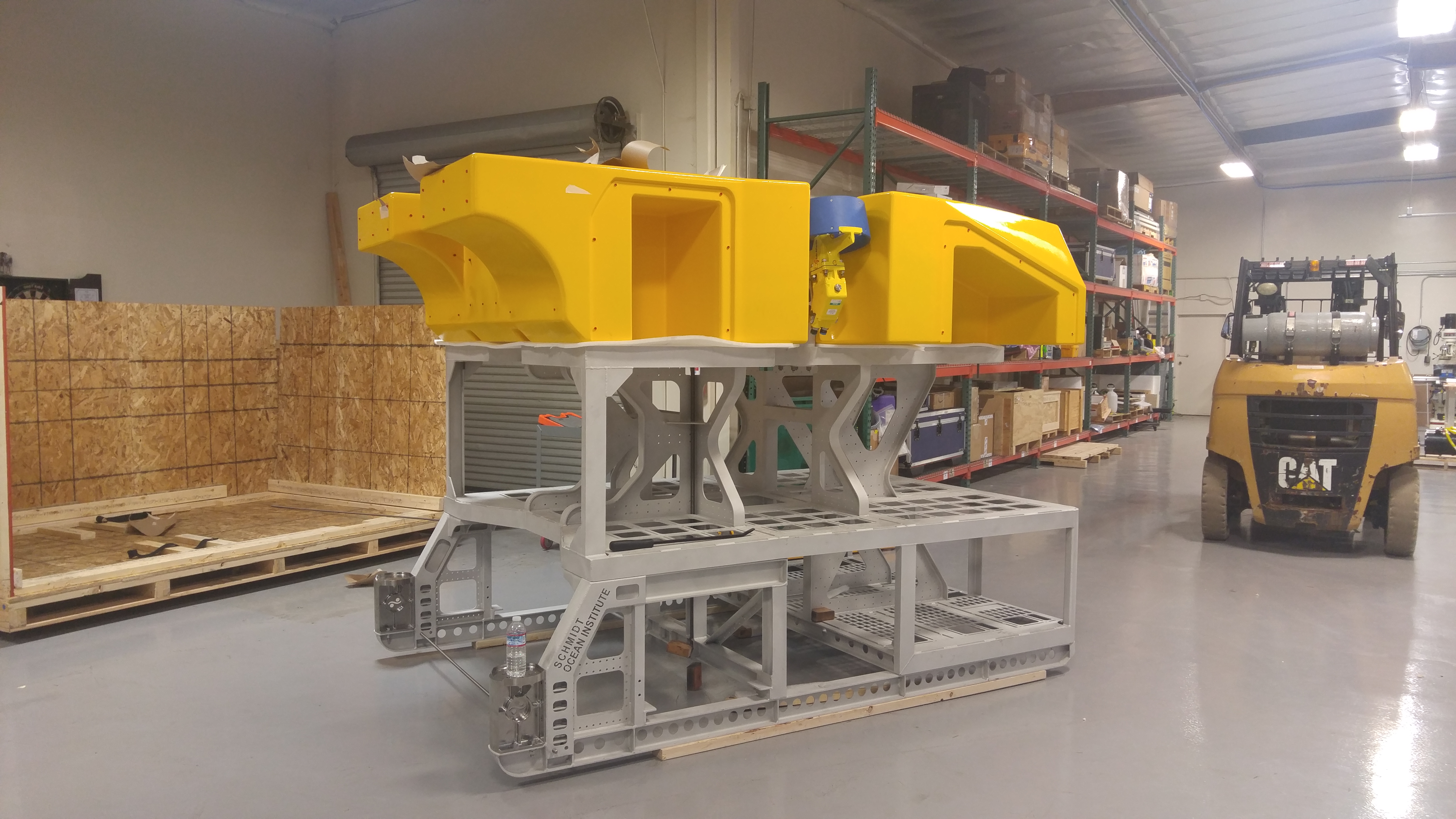
At Schmidt Ocean Institute, I contributed to the design and development of subsea robotic hardware, including the pressure enclosure and robotic arm mount. I also supported broader mechanical development across the platform, with a strong emphasis on finite element analysis (FEA) to validate designs, improve structural performance, and ensure reliability in demanding underwater environments.
Project context
The work sat in the overlap between structural design, packaging, mechanical integration, and analysis, where subsea systems demand conservative judgment and credible validation rather than optimistic assumptions.
Contribution breakdown
Where the work concentrated.
Pressure-tolerant enclosure design support
Supported the design of the pressure enclosure with attention to structural integrity, packaging constraints, and subsea reliability.
Robotic arm mount development
Helped design the robotic arm mount, focusing on mechanical integration, load transfer, and support structure behavior.
Broader subsystem support
Contributed across the larger mechanical development process wherever design detail, structural reasoning, or packaging support was needed.
Extensive FEA for validation
Used finite element analysis to validate designs, identify weak points, improve structural performance, and guide design refinement.
Engineering focus
Technical challenges
Media gallery
Reference material from the current portfolio bundle.
Lessons and notes
Subsea robotics rewards disciplined structural thinking. Pressure-tolerant hardware, mounted manipulators, and tightly packed mechanical systems all benefit from early validation work and repeated analysis-driven refinement.
Why this work matters
This project reflects a mode of engineering that is central to the rest of the portfolio: using mechanical judgment, integration awareness, and credible analysis to make robotics hardware more reliable in difficult environments.
Back to the wider project archive.
Return to the portfolio index to compare the Schmidt Ocean Institute work with the marine autonomy, amphibious robotics, and spherical robot projects.